
Following the success of the Future of Food, Fibre and Agri-tech symposium, hosted by the Centre of Excellence in Transformative Agribusiness in partnership with Selwyn District Council on 31 March, Lincoln University is inviting participants to take the next step in exploring how collaboration can unlock new opportunities for New Zealand's land-based sectors.
Around the world, Living Labs are changing the way innovation happens. By bringing together researchers, industry, government and communities to tackle real-world challenges, Living Labs create environments where ideas can be developed, tested and refined collaboratively—leading to solutions that are practical, relevant and ready for adoption.
Building on the energy, connections and ideas sparked at the symposium, Lincoln University are exploring the opportunity to establish New Zealand's first district-wide Living Lab network. This workshop is your chance to help shape that vision from the very beginning.
Together, participants will explore how a Living Lab approach could unlock new opportunities for Selwyn and beyond. Through presentations from international experts, shared local insights and interactive discussions, the workshop will identify priorities, spark new collaborations and begin developing projects with the potential to create lasting impact.
Discussions will explore opportunities across sustainable food and fibre systems, technology adoption, environmental resilience, community wellbeing, skills development and regional collaboration, while ensuring the priorities identified reflect the aspirations and needs of the Selwyn community.
More than a workshop, this is an opportunity to help shape a significant new initiative from its inception. By joining the conversation now, you'll contribute to the foundations of what could become New Zealand's first district-wide Living Lab network—helping define its priorities, build the partnerships that will drive it forward and play a role in creating a new model for collaboration and innovation across the country's food, fibre and land-based sectors.
Tuesday 25 August
9.00am–1.30pm
Inaka, Waimarie Building, Lincoln University
Programme
Registration | 9.00am–9.15am
Tea, coffee and networking on arrival.
Welcome & Setting the Scene | 9.15am–10.20am
The morning presentations will introduce the Living Lab concept, explore international best practice and demonstrate how the approach is already being applied in New Zealand. Together, these presentations will provide the context for the collaborative workshop that follows.
9.15am – Welcome
Professor Alan Renwick | Lincoln University
Professor Alan Renwick will outline the purpose of the workshop, highlighting how the event builds on the previous symposium and marks the beginning of a collaborative journey towards establishing NZ's first district-wide Living Lab.
9.20am – The Living Lab Opportunity
Professor Alan Renwick | Lincoln University
An introduction to the Food & Fibre project and the Living Lab concept. Alan will explore why Living Labs are gaining momentum internationally, what Lincoln University has learned through its research and the opportunity this model presents for accelerating innovation across Selwyn's food and fibre sector.
9.40am – Learning from Europe
Dr Idan Kopler | Migal Institute, Israel
Drawing on extensive experience with Living Labs across Europe and Israel, Idan will explore how the model has been successfully applied in different settings, what enables Living Labs to thrive, common challenges encountered and the lessons that can help shape a successful approach for Selwyn.
10.00am – A Living Lab in Practice
Associate Professor Racheal Bryant | Lincoln University
Racheal will share the story of the Lincoln University Research Dairy Farm Dairy Futures Living Lab, demonstrating how students, researchers, farmers, industry partners and community stakeholders are working together through co-design, experimentation and shared learning to accelerate innovation and improve on-farm outcomes
10.20am - Q&A Panel Session
Morning Tea | 10.50am–11.20am
Workshop: Shaping Selwyn's Living Labs | 11.20am–1.00pm
The workshop shifts from learning to action. Participants will explore seven proposed Living Lab opportunities and work together to identify priorities, partnerships and practical next steps for bringing them to life.
11.20am – Workshop Introduction
Professor Alan Renwick
Alan will introduce the workshop process, outline the seven proposed Living Lab themes and explain the outcomes participants will work towards throughout the morning.
Proposed Living Lab Opportunities
Selwyn Bio-Extraction Living Lab – Developing technologies that transform agricultural products and by-products into high-value ingredients and biomaterials.
Selwyn Value-Added Food & Beverage Living Lab – Supporting innovation in premium food and beverage manufacturing.
Selwyn Future Foods Living Lab – Testing emerging high-value food crops in real-world production systems.
Regenerative Food & Fibre Innovation Living Lab – Trialling regenerative farming systems, agritech, climate adaptation and value-added production under commercial conditions.
SMART Dairy Living Lab – Developing smarter dairy systems that improve environmental performance while maintaining productivity and resilience.
Crop Diversity Living Lab – Exploring diversified cropping systems, soil health and lower-input production.
Agrivoltaics & Future-Food Energy Living Lab – Integrating renewable energy generation with future food production and land-use innovation.
11.30am – Facilitated Workshop Discussions
Facilitated by Dr Allanah Robinson
Working in themed groups, participants will explore:
What opportunities exist within this Living Lab?
What is currently missing?
Who should be involved?
What capability or resources are required?
What would success look like?
What practical steps are needed to get started?
Participants will have the opportunity to circulate around the room towards the end of the session to view the ideas generated by other groups, before registering their interest in continuing to be involved as the Living Lab initiatives progress.
12.50pm – Closing Reflections & Next Steps
Professor Alan Renwick will summarise the key themes emerging from the workshop, outline the next steps for developing the Living Lab initiative, and explain how participants can continue contributing beyond the event.
Networking Lunch | 1.00pm–1.30pm
Continue the conversations over lunch and make new connections with fellow participants, researchers, industry representatives and community partners.
About Our Speakers
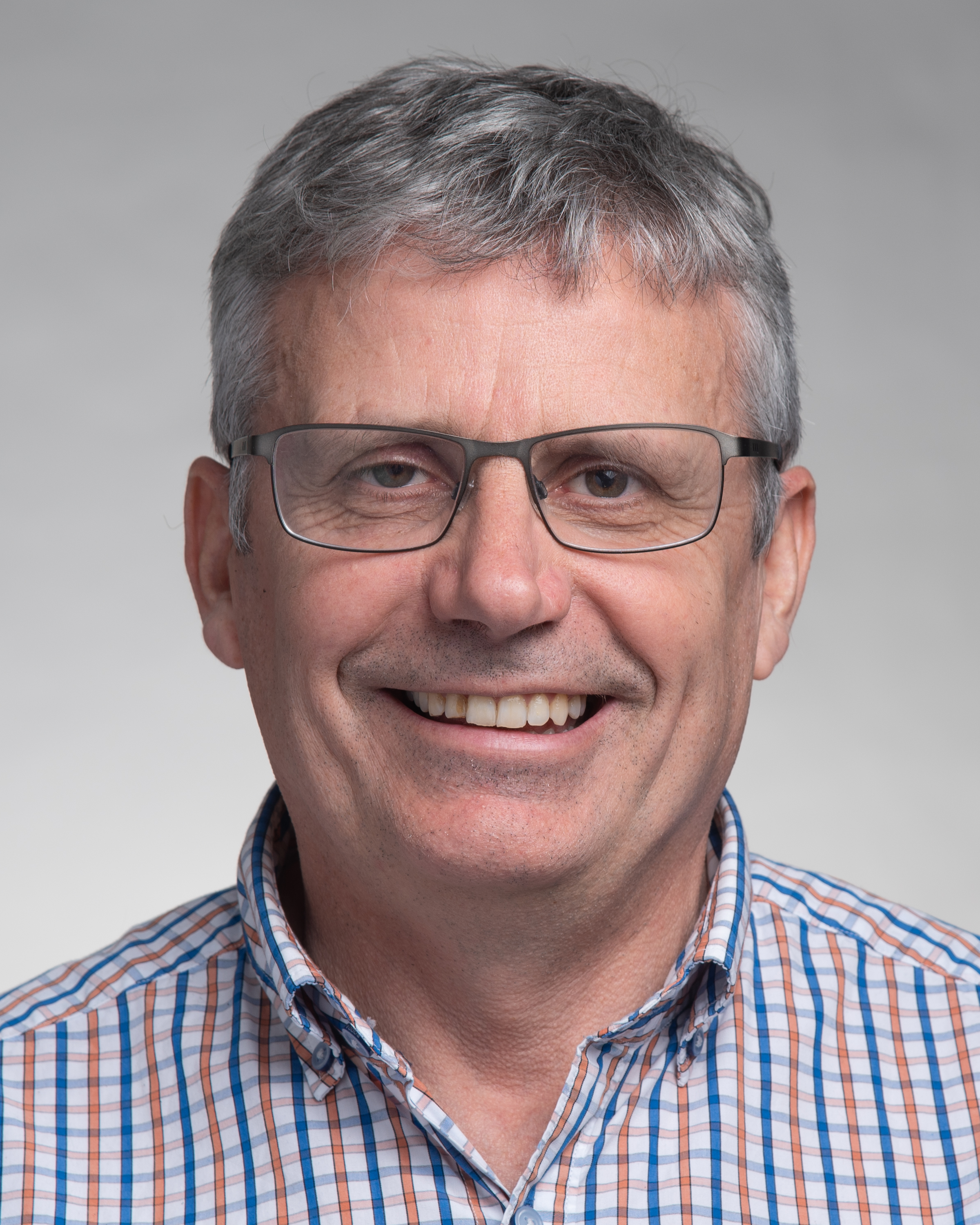
Prof. Alan Renwick | Lincoln University
My work focuses on agricultural and trade policy analysis, innovation in agrifood systems and analysis of agrifood value chains, all areas of fundamental importance to the functioning of the agrifood sector. Much of my career has involved applying economic analysis to assess the efficiency, effectiveness and equity of the EU Common Agricultural Policy (CAP), but more recently I have been focusing on the economics of existing and novel land-uses in New Zealand and technology adoption more generally. I am interested in quantifying the impact of innovation on the performance of either the agrifood system as a whole or of particular sectors within the industry. Linked to this is my research on the operation of value chains in developed and developing countries and the links with food security, which also provides useful information for policy makers. Many of my projects involve collaboration with researchers from other areas including agriculture, ecology, computer science and social science.
Dr Idan Kopler | Migal Institute, Israel
Dr Idan Kopler is an environmental researcher and project manager at the MIGAL Galilee Research Institute in Israel, specialising in agro-ecology, ecosystem ecology, hydrology and landscape ecology. He holds a PhD from the University of Haifa and has worked across research and applied agricultural systems, including precision livestock farming and climate–environment interactions.
Dr Kopler is currently European Wing Coordinator and Project Manager at MIGAL, where he coordinates international research activities, including Horizon Europe projects. He is also involved in the RAGILL Living Lab, supporting collaborative approaches to regenerative and carbon-smart agriculture, bringing researchers, farmers, industry and regional stakeholders together to develop practical solutions for resilient agricultural systems.
Assoc. Prof. Racheal Bryant | Lincoln University
My research focuses on dairy production systems and nutritional strategies for reducing the impact of dairying on the environment. My research topics include nutritional management of lactating dairy cows and young stock, grazing behaviour, pasture agronomy including the impact of technologies such as endophytes, N fertilisers and gibberellic acid. Much of my research involves finding commercial tools to solve practical problems. To do this, I work closely with farmers and industry professionals through organisations such as the South Island Dairy Event, South Island Dairying Development Centre farm focus days, and DairyNZ farm discussion groups. My research demonstrates how commercial technology can be adopted and modified to measure outcomes and improve analysis and explanation of science outcomes.